Overview
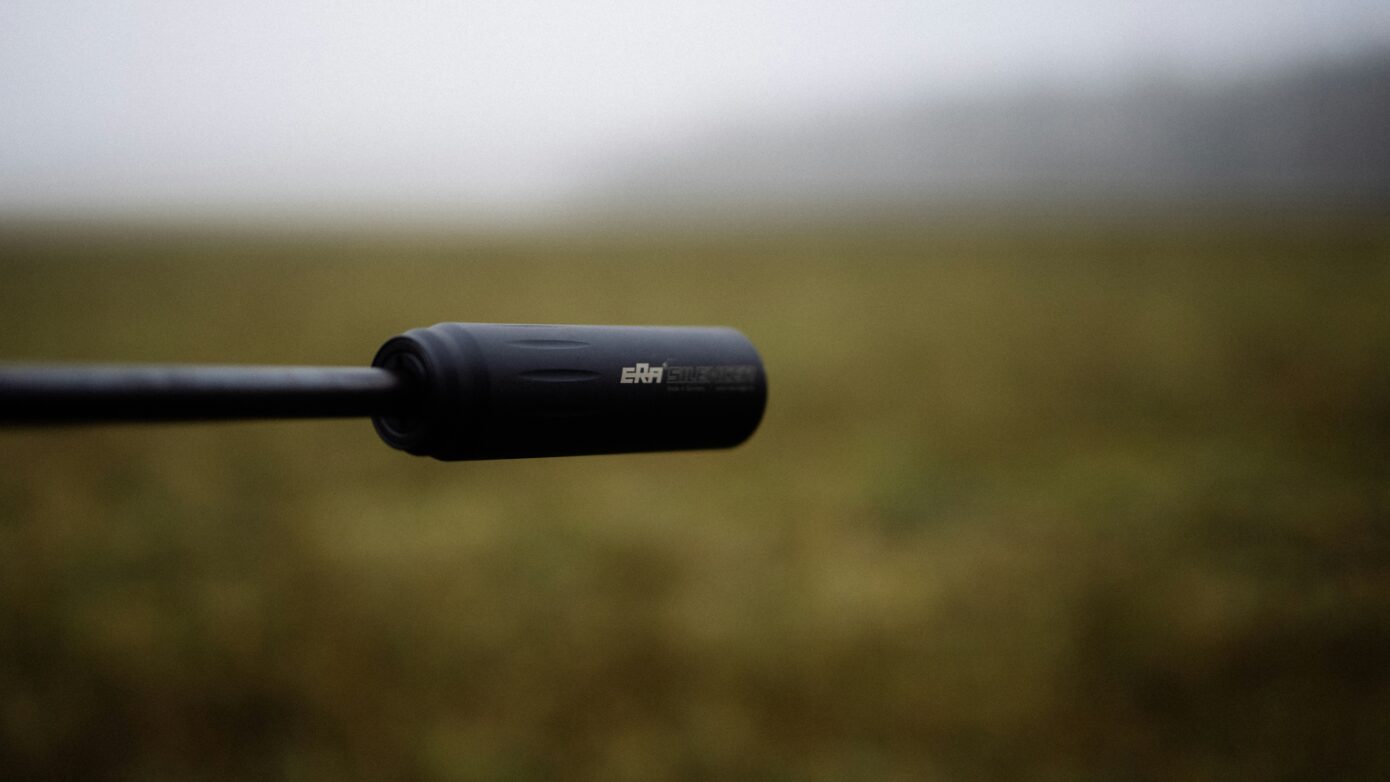
The Home Office has now moved beyond consultation and enacted the Crime and Policing Act 2026, which formally removes sound moderators from the statutory definition of a firearm. This change reflects the overwhelming consultation evidence that moderators are inert accessories with clear health and safety benefits and no measurable impact on public safety.
The Act repeals section 57(1)(d) of the Firearms Act 1968, which previously defined a moderator as:
an accessory to a lethal barrelled weapon or a prohibited weapon where the accessory is designed or adapted to diminish the noise or flash caused by firing the weapon.
Removing this provision ends decades of unnecessary administrative handling of tens of thousands of moderators – many recorded as NVN (“no visible number”) – and eliminates the need for variations, serial‑number entries, and certificate space being consumed by what is essentially a metal tube.
Practical Results for Shooters
- You must hold a valid firearm certificate or shotgun certificate to possess a moderator.
- You no longer need a variation to buy or use a moderator.
- You may own multiple moderators without notifying police.
- Moderators will no longer appear on your certificate.
Key Findings from the Original Consultation (For Context)
- 94% supported removing moderators from certification.
- 98% agreed deregulation poses no public safety risk.
- 95% emphasised their hearing‑protection benefits.
- 96% felt the criteria for a Legislative Reform Order were met.
These figures underpin the policy direction now delivered through primary legislation.
What the Crime and Policing Act 2026 Actually Does
1. Moderators are no longer “firearms”
They are no longer subject to Section 1 certification, variation, or entry on a firearm certificate.
2. A new offence is created: possession of a sound moderator without a certificate
Section 2A introduces a simple offence: possessing a “relevant accessory” without holding a firearm certificate or shotgun certificate. This removes the administrative burden of variations while retaining a basic control mechanism over possession.
3. Transitional arrangements
Transitional arrangements will be set out in Home Office guidance. It is likely that:
- Existing moderators recorded on certificates will be treated as lawful possessions.
- Certificate holders will not be required to apply for removal of moderator entries.
- Police forces will remove moderator entries from digital systems as part of routine renewals.
This approach mirrors previous legislative transitions and avoids unnecessary bureaucracy.
Legal Precision and Remaining Ambiguities
As with any further amendment to the already heavily amended Firearms Act 1968, some drafting choices leave areas of imprecision. Section 2A defines a “relevant accessory” only by reference to firearms “to which section 1 applies”, meaning moderators intended solely for air rifles are not caught by the new offence. This is legally clear, even if many designs are physically interchangeable.
The amended section 8 expressly authorises dealers to possess relevant accessories, but the wording is less symmetrical than for firearms and ammunition, where possession, purchase, and acquisition are all set out explicitly. In practice, the new offence is limited to possession without a certificate, and dealers are exempt, so routine commercial handling should remain lawful. Nonetheless, the drafting is untidy and may benefit from clarification in guidance or secondary legislation to ensure the framework operates cleanly.