Install on your iOS device:
Tap then "Add to Home Screen"
  • SUPPORTING RESPONSIBLE SHOOTING

Featured

Good Reason – Calibre

Good Reason – Calibre 1707 2560 Vicky Downs

Explores calibre considerations in firearms licensing.

The often-seen Police focus on calibre risks hitting the target but missing the point.

Sorry you do not have access to this content - register or upgrade.

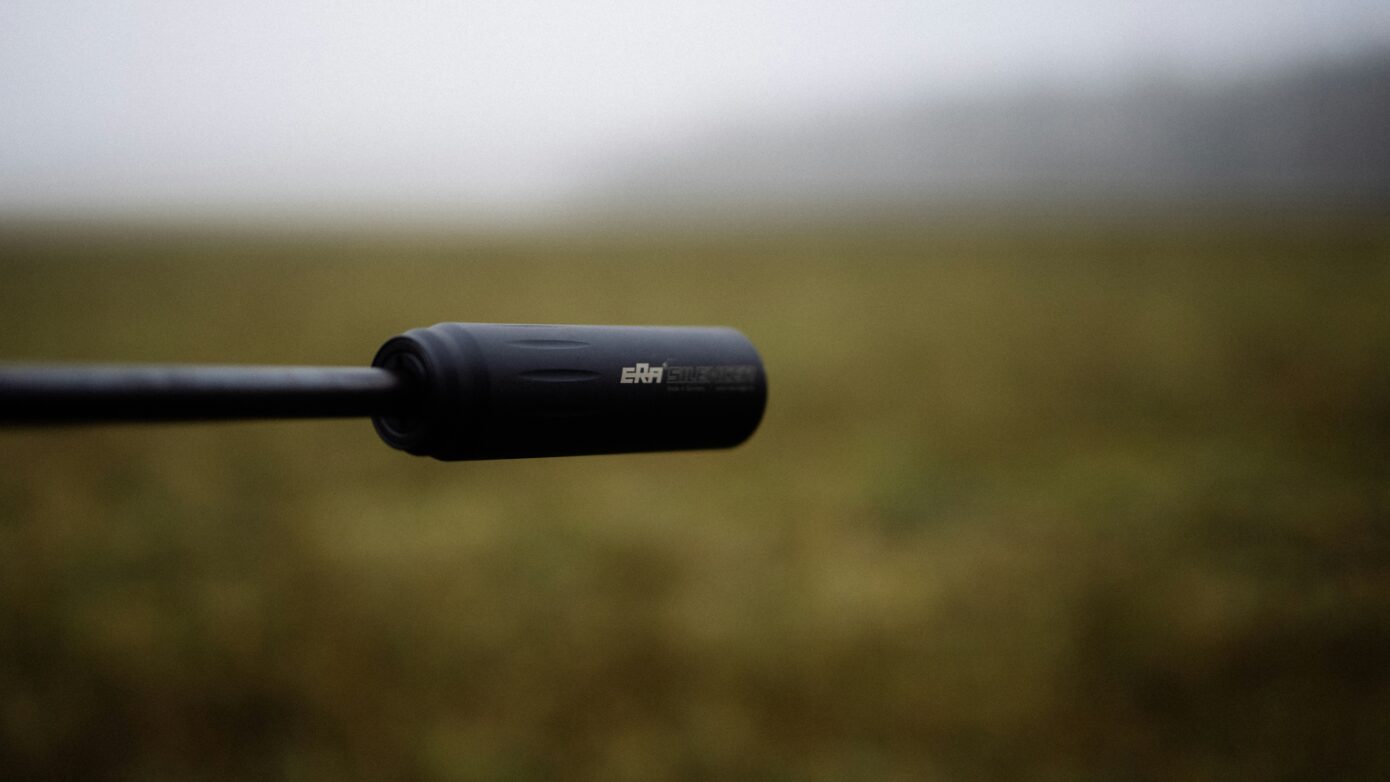
Sound Moderators

Sound Moderators 8192 5464 Vicky Downs

Summary of the New Legal Position

Overview

The Crime and Policing Act 2026 has now come into force, formally removing sound moderators from the statutory definition of a firearm. This change reflects the overwhelming consultation evidence that moderators are inert accessories with clear health and safety benefits and no measurable impact on public safety.

The Act repeals section 57(1)(d) of the Firearms Act 1968, which previously defined a moderator as:

an accessory to a lethal barrelled weapon or a prohibited weapon where the accessory is designed or adapted to diminish the noise or flash caused by firing the weapon.

Removing this provision ends decades of unnecessary administrative handling of tens of thousands of moderators — many recorded as NVN (“no visible number”) — and eliminates the need for variations, serial‑number entries, and certificate space being consumed by what is essentially a metal tube.

Practical Results for Shooters

  • You must hold a valid firearm certificate or shotgun certificate to possess a moderator intended for use with a Section 1 firearm.
  • You no longer need a variation to buy or use a moderator.
  • You may own multiple moderators without notifying police.
  • Moderators will no longer appear on your certificate.

These changes simplify ownership and acquisition, but they do not remove moderators from control entirely.

What the Crime and Policing Act 2026 Actually Does

1. Moderators are no longer “firearms”

They are no longer subject to Section 1 certification, variation, or entry on a firearm certificate. This is a significant and positive shift, aligning the law more closely with practical reality.

2. A new offence is created

The Act introduces a new offence: possession of a sound moderator intended for use with a Section 1 firearm without holding a firearm or shotgun certificate.

This retains a basic control mechanism while removing the administrative burden of variations. However, it also introduces an element of subjectivity — the offence hinges on intended use, not physical compatibility.

3. Transitional arrangements

Although formal guidance is still expected, the practical position is clear:

  • Existing moderators recorded on certificates remain lawful possessions.
  • Certificate holders do not need to apply for removal of moderator entries.
  • Police forces will remove moderator entries from digital systems as part of routine renewals.

This mirrors previous legislative transitions and avoids unnecessary bureaucracy.

Legal Precision and Remaining Ambiguities

As with any further amendment to the already heavily amended Firearms Act 1968, some drafting choices leave areas of imprecision.

Section 2A defines a “relevant accessory” only by reference to firearms “to which section 1 applies”, meaning moderators intended solely for air rifles fall entirely outside the new offence — even though many designs are physically interchangeable. This is legally clear but practically untidy.

The amended section 8 authorises dealers to possess relevant accessories, but the wording is less symmetrical than the provisions for firearms and ammunition, where possession, purchase, and acquisition are all set out explicitly. In practice, routine commercial handling should remain lawful, but the drafting could have been cleaner.

A Step Forward — But Not the Step We Needed

While the reform is welcome, it is not the simple, elegant solution many hoped for. The Government has removed moderators from the definition of “firearm”, but then immediately created a new offence based on intention. This introduces foreseeable enforcement challenges:

Officers will still need to assess intended use.
Moderators capable of fitting multiple firearms will still create ambiguity.
The time saved on variations may be offset by time spent interpreting intention.
The most straightforward approach would have been to remove moderators from control entirely. That would have delivered genuine administrative relief and eliminated the grey areas that will now occupy police time. Instead, we have a halfway house — better than before, but still needlessly complicated.

Conclusion

The Crime and Policing Act 2026 delivers long‑awaited progress. Moderators are no longer firearms, variations are gone, and certificate holders can acquire them without additional bureaucracy. But the new offence based on intended use means the system is not as clean or efficient as it could have been.

This is a positive reform — just not the simple one the sector needed.

Law – What is a Firearm?

Law – What is a Firearm? 2560 1707 Vicky Downs

What makes a firearm, legally speaking?

From barrels to bolts, this guide cuts through jargon to answer this question.

Sorry you do not have access to this content - register or upgrade.

Law – What is Ammunition?

Law – What is Ammunition? 2560 1706 Vicky Downs

This article offers a clear overview of how UK firearms law defines ammunition, including its four component parts and broader interpretations covering grenades and bombs.

It explains prohibited ammunition, highlights exemptions for certain shotgun, airgun, and blank rounds, and distinguishes between rules on possession and purchase.

It also introduces The Firearms Act 2023 offence of possessing ammunition components with intent to manufacture, which is aimed at preventing criminal misuse.

Sorry you do not have access to this content - register or upgrade.

Introduction to Firearms Licensing

Introduction to Firearms Licensing 1920 2560 Chris Downs

The UK firearms licensing regime is one of the most stringent in the world, designed to ensure public safety while allowing legitimate firearm ownership for specific purposes linked to leisure, employment and agriculture. The system is primarily governed by the Firearms Act 1968, which has been subject to many amendments since first enacted and now presents a complex and often confusing legal framework.

This article introduces and discusses the main features of the licensing regime and while aimed at those new to shooting is a useful reference point for all.

Sorry you do not have access to this content - register or upgrade.

I am in Voluntary Surrender

I am in Voluntary Surrender 2560 1707 Chris Downs

The guide offers practical support for Certificate Holders who have voluntarily surrendered their guns — a situation currently affecting an estimated 8,500–10,000 people across the UK.

It explains that Voluntary Surrender (VS) isn’t defined in law, though referenced in official guidance, and outlines both appropriate uses and misuses.

Key risks include the loss of appeal rights, extended timelines, and lack of transparency.

The document provides step-by-step actions for holders and encourages affected individuals to seek further support via the “Contact Us” function on the site.

Sorry you do not have access to this content - register or upgrade.

Alcohol

Alcohol 2560 1707 Vicky Downs

This article explores how alcohol consumption is assessed in UK firearms licensing, explains the evolving medical guidelines, and offers practical steps for certificate holders to prevent misunderstandings or misinterpretations.

Sorry you do not have access to this content - register or upgrade.


Unlock The Data

Unlock The Data 2560 1920 Vicky Downs

Subject Access Requests (SARs) allow individuals to access personal data held about them under UK GDPR—especially useful in firearms licensing disputes. Requests can be made in writing or verbally, and police must usually respond within one month. SARs can uncover how your data is used, spot errors, or support informal challenges. But they must be used carefully, as excessive or unfounded requests can be refused.

Sorry you do not have access to this content - register or upgrade.

Variations

Variations 2560 1440 Vicky Downs

The article explains the process of varying elements of a Firearms Certificate in the UK, covering statutory provisions from the Firearms Act 1968. It outlines different types of variations—one-for-one exchanges, adding firearms/ammunition, and altering certificate conditions.

It also details application methods and considerations, including legal precedents and Home Office guidelines. The document highlights key arguments and evidence that Certificate Holders may need when requesting condition changes.

This is a complex area which has overlaps with articles on “Land Checks” and “Conditions”.

Sorry you do not have access to this content - register or upgrade.

Conditions

Conditions 2560 1707 Chris Downs

Outlines the mandatory and additional conditions that can be attached to a UK Shotgun (SGC) and Firearms Certificate (FAC), detailing their legal basis under the Firearms Act 1968 and Firearms Rules 1998.

It explains the principles governing the imposition of conditions, emphasizing proportionality, necessity, and public safety.

Additionally, it addresses the limits of appealing conditions and also highlights police authority to require a certificate for amendments and the consequences of failing to comply

Sorry you do not have access to this content - register or upgrade.