Install on your iOS device:
Tap then "Add to Home Screen"
  • SUPPORTING RESPONSIBLE SHOOTING

Free Content

Final Chapter for Lead

Final Chapter for Lead 1024 1024 Vicky Downs

The UK is phasing out lead ammunition by 2029. With a 3-year transition ahead, shooters must adapt to new rules.

Here’s what this shift means for the future of UK shooting.

Introduction:

On 10th July 2025 the Department for Environment, Food & Rural Affairs (DEFRA) announced a ban on “Toxic lead ammunition”.

Environment Minister Emma Hardy said:

“Britain is a proud nation of nature lovers, but our rivers are heavily polluted, and majestic birds are declining at an alarming rate.


This new ban on lead in ammunition for most uses will help reverse this – rejuvenating pride in our countryside by protecting precious birdlife and cleaning up rivers.


Non-lead alternatives are readily available, and we’ll continue to work closely with the shooting sector throughout this transition.”

🧑‍⚕️ This policy is driven by strong evidence of health risks, especially for children and wildlife.

🔄 A major transition away from lead is coming— use the 3-year transition period to plan ahead for alternative ammunition.

🧭 Enforcement is likely at retail level, so supply chains will feel the change first.

The Message – in Brief:

The UK Government plans to introduce legislation restricting sale and use of lead ammunition by summer 2026, followed by a three-year transition period ending in 2029.

It rejected earlier proposals for a five-year transition saying that this extended time period had taken impact to supply chains from Covid-19 into consideration.

  • 🗓️ Legislation introduced: Summer 2026
  • ⏳ Transition period: 2026–2029
  • 🚫 Full ban effective: 2029 – covering sale and use of lead shot and large-calibre bullets

Exemptions will remain for:

  • Military and police use
  • Elite athletes – proof will be required
  • Indoor Ranges
  • Outdoor ranges – provided control measures are present.
  • Small-calibre ammunition
  • Air weapon pellets
  • Collectors (Not for firing)
  • Academic and forensic work

Further detail:

Small Calibre – All calibres above 6.17mm (includes .243 and everything larger) intended for live quarry shooting will be restricted.

Packaging – All lead ammunition above 6.17 (.243) sold for target shooting will be labelled “must not be used for live quarry”.

Indoor use of lead shot – This will be formally restricted to ensure that the ban on lead shot generally can be effective at point of sale. This removes the possibility that any lead shot labelled for “indoor use only” would be used outdoors and closes this potential loophole.

Outdoor Target Ranges – Must be “permanent” – The detail of how this will be defined is unclear.

In conclusion:

Lead use can be traced back over 6,000 years in the widest variety of applications. It’s density, malleability and cost-effective nature are significant contributors to the longevity of its use.

Given the breadth of evidence, few would contest the rationale behind a transition away from but it seems as if the changes impacting on UK Shooting are happening almost monthly.

Having said this there is one section of the announcement that we would highlight:

“Alternatives to lead shot have become more efficient and widely available in recent years, with steel and tungsten-based shot being two popular options.


The government will continue to engage with the shooting industry to support the transition to alternative ammunition types.”

While non-lead alternatives are improving, uptake and availability remain varied.

We’d encourage the Home Office to remember that UK Shooting offers real benefits to both participants and the wider population. Moving forward meaningful consultation and engagement will be critical to ensure that this to ensure this shift does not feel disproportionate for UK shooting communities.

We’ll continue to monitor and update what this means for shooters, clubs, and retailers.

Scrap the System?

Scrap the System? 1920 2560 Vicky Downs

This visionary article explores how the UK’s firearms licensing system might look if designed from scratch.

Moving beyond a century of reactive laws—from the 1920 Firearms Act to post-Keyham reforms—it proposes a digitally enabled, service-focused framework built around public safety, consistency, and clarity.

Introduction –

Ask any certificate holder—licensing delays, legal ambiguity, and patchy communication aren’t just an inconvenience. They’re a public safety risk

If the UK were to design its firearms licensing system from scratch tomorrow, what would it look like? With a century of legacy legislation behind us—from the 1920 Firearms Act to the post-Keyham reforms—the current framework is a patchwork of historical responses.

But what if we could start fresh?

To be clear. This article isn’t fantasy. It’s achievable and a call to action

🎯 Principles for a Modern Licensing System

1. Serve the Public

Good service to certificate holders matters—but responsible licensing affects everyone. We’ve seen how poor decisions can damage community trust and compromise safety. A modern system must put fairness, transparency, and public confidence first.

2. Focus on Public Safety

Licensing isn’t just administration—it’s risk management. Lessons from past tragedies remind us: public protection must be the system’s central goal. Everything else flows from that.

3. Digital by Default, Inclusive by Design

A streamlined digital portal should be the norm—but never at the cost of access. Paper options remain where needed. Efficiency and equity can coexist.

4. Efficient Processing & Smart Safeguards

Applications and renewals should be timely, error-resistant, and secure. No medical proformas. No paper-based loopholes. Fraud risk reduced through smart design.

5. Central Oversight, Local Delivery

Leadership at the national level ensures consistency with local units continuing to engage. This balance helps eliminate patchy training, conflicting processes, and appeals driven by regional disparity.

6. Clarity & Accessibility of the Law

Rewrite the legal framework in plain English. Define terms clearly. Replace decades of piecemeal amendments with a single, understandable system—so applicants know their responsibilities and authorities apply the law fairly.

7. Transparent Cost Recovery

Fees should be proportionate, visible, and linked to service standards. Applicants deserve to know what they’re paying for—and how delivery is being measured.

🧠 What Would Be Lost—and Gained?

We’d lose the historical inertia of legacy legislation, but gain a system built for today’s risks and realities. Certificate holders would benefit from clarity and fairness; police forces from consistency and resourcing; and the public from a licensing regime that’s proactive, not reactive.

There will be challenges – Eliminating the current Court Appeal process will not be an overnight endeavour but the current system involves thousands of pounds worth of police, Court and legal effort when an estimated 90% don’t require anything more than independent arbitration.

Some might say this is wishful thinking—but firearmslicensing.net has already proved digital safeguards are possible (See our digital membership card). So why wait?

If you support a smarter licensing future, start the conversation—share your ideas, challenge assumptions, and help push for change.

A variety of firearms licensing resources

Firearms Licensing – Resources

Firearms Licensing – Resources 1709 2560 Vicky Downs

This guide to firearms licensing resources includes reference to:

  • Statutory Guidance (2023): A mandatory reference for police decision-making, focused on consistency and public safety.

  • Home Office Guide (2024): A detailed, non-statutory companion for interpreting firearms law.

  • Firearms Security Handbook (2020): Practical requirements for safe storage, transport, and display of firearms.

  • College of Policing APP: Operational guidance for police forces in line with legal and ethical obligations.

  • Firearms Act 1968: The legal foundation defining certification, prohibitions, exemptions, and enforcement mechanisms.

Introduction

This guide is intended for certificate holders, FEOs, legal professionals, and anyone seeking a structured understanding of UK firearms law.

It brings together the most authoritative materials that shape firearms licensing into one place.

It covers everything from statutory guidance and operational practice to foundational legislation and security expectations.

Each section provides a brief overview and direct access to primary documents, helping everyone navigate the often too complex world of Firearms Licensing.

The order in which I have presented these might seem wrong. Many would argue that the Firearms Act should be at the top as it represents the key legislation in this area. To be honest – they have a point, but I have arranged these in order of those most likely to help you address any issues you might experience.

Subscribers to firearmslicensing.net can access tailored breakdowns and interpretation tools.

This supports our key goal to Support Responsible Shooting and empower everyone to better understand their rights and obligations within the system.

To find out more about subscription options please follow this link.

1) Statutory Guidance

The Statutory Guidance for Chief Officers of Police on Firearms Licensing—revised in February 2023—was introduced to ensure greater consistency across police forces in the application of firearms licensing law. The need for this was first highlighted in 2015 by the “Targeting the Risk” review conducted by His Majesty’s Inspectorate of Constabularies (HMIC) but not implemented until November 2021 (Post Keyham).

The guidance outlines the processes and criteria for assessing an applicant’s suitability to possess firearms or become a Registered Firearms Dealer (RFD). It covers a wide range of checks, including background and medical checks, home visits, referee assessments, and—newly added—social media reviews. It also addresses continuous assessment, unannounced visits, and the handling of renewals, revocations, and appeals.

Importantly, while chief officers retain discretion, any departure from the guidance must be clearly justified on a case-by-case basis.

https://www.gov.uk/government/publications/statutory-guidance-for-police-on-firearms-licensing

2) Home Office Guide on Firearms Licensing Law

The Home Office’s Guide on Firearms Licensing Law (originally published in 2012 and most recently updated in December 2024) provides a comprehensive, non-statutory reference for police forces, firearms licensing professionals, and interested parties. It’s designed to explain the complex framework of UK firearms legislation and should be read alongside the statutory guidance for chief officers of police.

The key areas covered are:

  • Licensing Framework: It outlines the legal basis for firearm and shotgun certificates under the Firearms Acts, including eligibility, suitability, and good reason requirements.
  • Application Process: Guidance on background checks, interviews, home visits, and the role of medical information and referees.
  • Conditions and Revocations: Explains standard and discretionary conditions, revocation procedures, and appeals.
  • Firearms Dealers and Clubs: Covers registration, record-keeping, and compliance expectations for dealers and shooting clubs.
  • Specialist Topics: Includes sections on antique firearms, prohibited weapons, museum collections, and exemptions (e.g. Section 11(6) clay shoots).
  • Recent Updates: The 2024 revision reflects changes such as updated departmental names, guidance on remote sales by dealers, and reinstated exemptions for race starters and clay pigeon shoots.

https://www.gov.uk/government/publications/firearms-law-guidance-to-the-police-2012


3) The Firearms Security Handbook

The Firearms Security Handbook 2020 offers detailed guidance on the secure storage and transport of firearms, shotguns, and ammunition. It’s aimed at certificate holders, firearms dealers, museums, clubs, and police forces.

The key areas covered are:

  • Security Principles: Emphasises layered security and proportionality based on risk. It introduces three levels of security, with Level 1 being the baseline for most certificate holders.
  • Cabinet Standards: Provides specifications for gun cabinets, safes, and armoury rooms, including construction materials, fixings, and locking mechanisms.
  • Special Environments: Offers tailored advice for mobile homes, garages, and shared dwellings.
  • Section 5 and Business Use: Covers additional requirements for dealers, auctioneers, and those storing firearms for professional purposes.
  • Museums and Clubs: Sets out expectations for secure display and storage in public collections and cadet corps premises.
  • Transport Guidance: Details safe carriage of firearms and ammunition, including black powder, with reference to relevant transport regulations.
  • Annexes: Include illustrations of cabinet construction, standards references, and good practice for transporting ammunition.

https://www.gov.uk/government/publications/firearms-security-handbook


4) The Police Authorised Professional Practice – Firearms Licensing

The Authorised Professional Practice (APP) on Firearms Licensing from the College of Policing provides operational guidance for police forces in England and Wales (Last updated April 2024). It complements the Home Office statutory and non-statutory guidance and is designed to ensure consistency, transparency, and public safety in firearms licensing decisions.

The key areas covered are:

  • Purpose and Principles: The APP aims to prevent foreseeable harm, manage risk decisively, and deliver a fair, proportionate, and consistent service. It emphasises professional judgment and effective governance.
  • Legal Framework: Licensing activity is governed by the Firearms Act 1968 and related legislation. Chief constables are legally responsible for granting, renewing, or revoking certificates.
  • Suitability Assessment: Applicants must demonstrate a good reason and be assessed as suitable. The main test is whether they can possess firearms without danger to public safety or the peace. Suitability checks include criminal history, mental health, domestic circumstances, and more.
  • Application Process: Applications are logged on the National Firearms Licensing Management System (NFLMS). Enquiries begin immediately and include background checks, home visits, and interviews. Firearms Enquiry Officers (FEOs) play a key role in assessing security, competence, and any safeguarding concerns.
  • Decision Making: Decisions to grant, refuse, or revoke certificates must be evidence-based and made by appropriately authorised personnel. The APP encourages forces to document rationale clearly and act swiftly on identified risks.
  • Alignment and Accountability: Forces are expected to align with this APP and the Home Office guidance. If they choose not to, they must notify the national policing lead and provide justification.

https://www.college.police.uk/app/firearms-licensing 

5) The Firearms Act 1968

The Firearms Act 1968 is the cornerstone of firearms legislation in Great Britain. It consolidates earlier laws and sets out the legal framework for the possession, acquisition, and use of firearms and ammunition.

The key areas covered are:

  • Section 1 – Firearm Certificates: Requires individuals to hold a firearm certificate to possess, purchase, or acquire most firearms and ammunition. Applicants must demonstrate a good reason and be assessed as suitable.
  • Section 2 – Shotgun Certificates: Establishes a separate, slightly less intrusive certification process for shotguns. It could be said that the Police have to justify a refusal rather than the applicant proving themselves.
  • Section 3 – Transactions: Regulates the sale, transfer, and repair of firearms and ammunition. Only certificate holders or registered dealers may engage in such transactions.
  • Section 5 – Prohibited Weapons: Lists weapons that are generally prohibited (e.g. automatic firearms, certain handguns). Possession of these items requires special authority from the Home Secretary.
  • Section 7 – Police permit – Gives police the option to issue a permit to enable rather than a full Certificate.
  • Section 11 – Exemptions: Provides exemptions for certain activities, such as clay pigeon shooting under supervision or use at approved clubs, where a certificate may not be required.
  • Section 20 – Creates the offence of trespassing while in possession of a firearm.
  • Section 26A & 26B – Rules around the application process for Firearms and Shotgun Certificates.
  • Section 27 & 28 – Describe when a Firearms and Shotgun Certificate may be granted.
  • Section 29 – Enables variations to Firearms Certificates.
  • Section 33–39 – Firearms Dealers: Requires dealers to be registered with the police and maintain records of transactions. These sections also cover inspections and revocation of registration.
  • Section 44 – Appeals: Allows applicants to appeal refusals, revocations, or conditions imposed on certificates to the Crown Court.
  • Section 46 – 52 – Provides Police powers and rules for the punishment of offences

https://www.legislation.gov.uk/ukpga/1968/27/contents

Sound Moderators

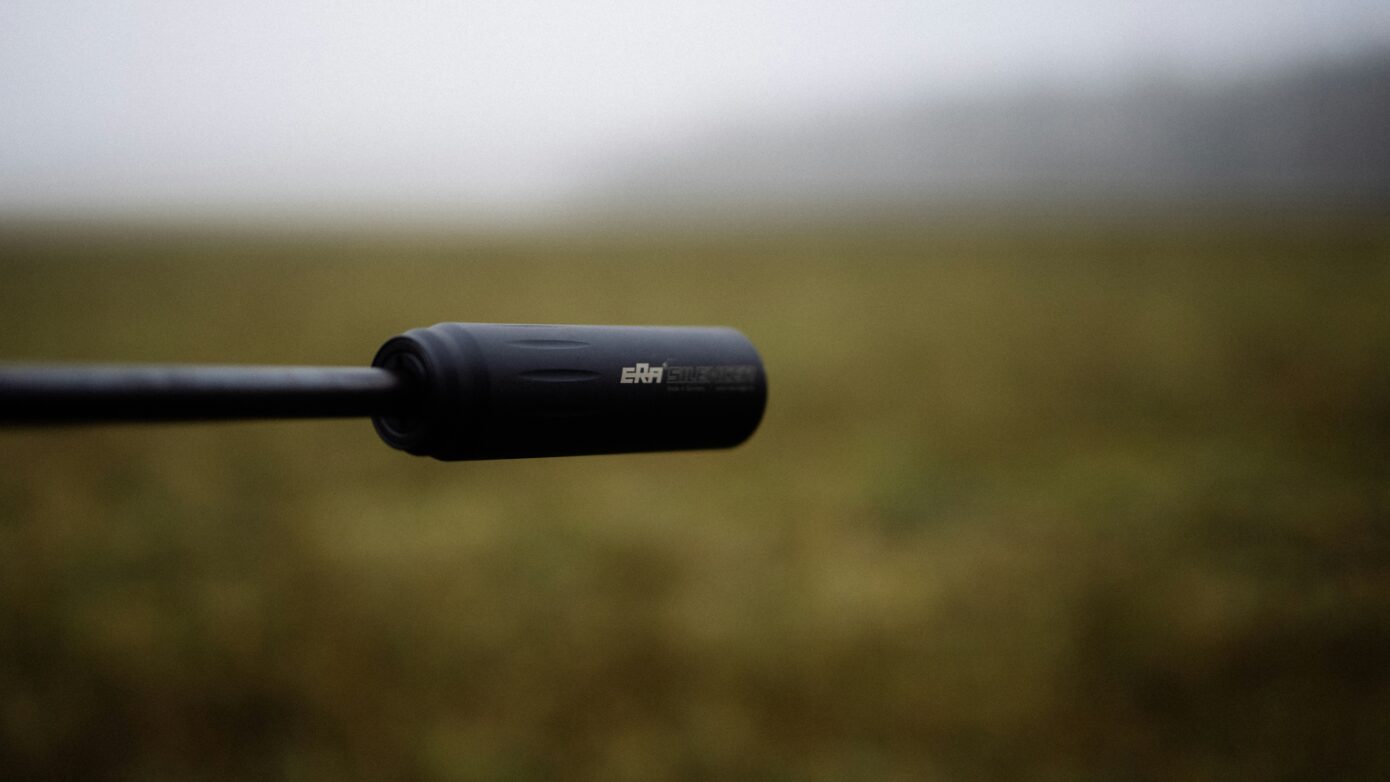
Sound Moderators 8192 5464 Vicky Downs

Summary of the New Legal Position

Overview

The Crime and Policing Act 2026 has now come into force, formally removing sound moderators from the statutory definition of a firearm. This change reflects the overwhelming consultation evidence that moderators are inert accessories with clear health and safety benefits and no measurable impact on public safety.

The Act repeals section 57(1)(d) of the Firearms Act 1968, which previously defined a moderator as:

an accessory to a lethal barrelled weapon or a prohibited weapon where the accessory is designed or adapted to diminish the noise or flash caused by firing the weapon.

Removing this provision ends decades of unnecessary administrative handling of tens of thousands of moderators — many recorded as NVN (“no visible number”) — and eliminates the need for variations, serial‑number entries, and certificate space being consumed by what is essentially a metal tube.

Practical Results for Shooters

  • You must hold a valid firearm certificate or shotgun certificate to possess a moderator intended for use with a Section 1 firearm.
  • You no longer need a variation to buy or use a moderator.
  • You may own multiple moderators without notifying police.
  • Moderators will no longer appear on your certificate.

These changes simplify ownership and acquisition, but they do not remove moderators from control entirely.

What the Crime and Policing Act 2026 Actually Does

1. Moderators are no longer “firearms”

They are no longer subject to Section 1 certification, variation, or entry on a firearm certificate. This is a significant and positive shift, aligning the law more closely with practical reality.

2. A new offence is created

The Act introduces a new offence: possession of a sound moderator intended for use with a Section 1 firearm without holding a firearm or shotgun certificate.

This retains a basic control mechanism while removing the administrative burden of variations. However, it also introduces an element of subjectivity — the offence hinges on intended use, not physical compatibility.

3. Transitional arrangements

Although formal guidance is still expected, the practical position is clear:

  • Existing moderators recorded on certificates remain lawful possessions.
  • Certificate holders do not need to apply for removal of moderator entries.
  • Police forces will remove moderator entries from digital systems as part of routine renewals.

This mirrors previous legislative transitions and avoids unnecessary bureaucracy.

Legal Precision and Remaining Ambiguities

As with any further amendment to the already heavily amended Firearms Act 1968, some drafting choices leave areas of imprecision.

Section 2A defines a “relevant accessory” only by reference to firearms “to which section 1 applies”, meaning moderators intended solely for air rifles fall entirely outside the new offence — even though many designs are physically interchangeable. This is legally clear but practically untidy.

The amended section 8 authorises dealers to possess relevant accessories, but the wording is less symmetrical than the provisions for firearms and ammunition, where possession, purchase, and acquisition are all set out explicitly. In practice, routine commercial handling should remain lawful, but the drafting could have been cleaner.

A Step Forward — But Not the Step We Needed

While the reform is welcome, it is not the simple, elegant solution many hoped for. The Government has removed moderators from the definition of “firearm”, but then immediately created a new offence based on intention. This introduces foreseeable enforcement challenges:

Officers will still need to assess intended use.
Moderators capable of fitting multiple firearms will still create ambiguity.
The time saved on variations may be offset by time spent interpreting intention.
The most straightforward approach would have been to remove moderators from control entirely. That would have delivered genuine administrative relief and eliminated the grey areas that will now occupy police time. Instead, we have a halfway house — better than before, but still needlessly complicated.

Conclusion

The Crime and Policing Act 2026 delivers long‑awaited progress. Moderators are no longer firearms, variations are gone, and certificate holders can acquire them without additional bureaucracy. But the new offence based on intended use means the system is not as clean or efficient as it could have been.

This is a positive reform — just not the simple one the sector needed.